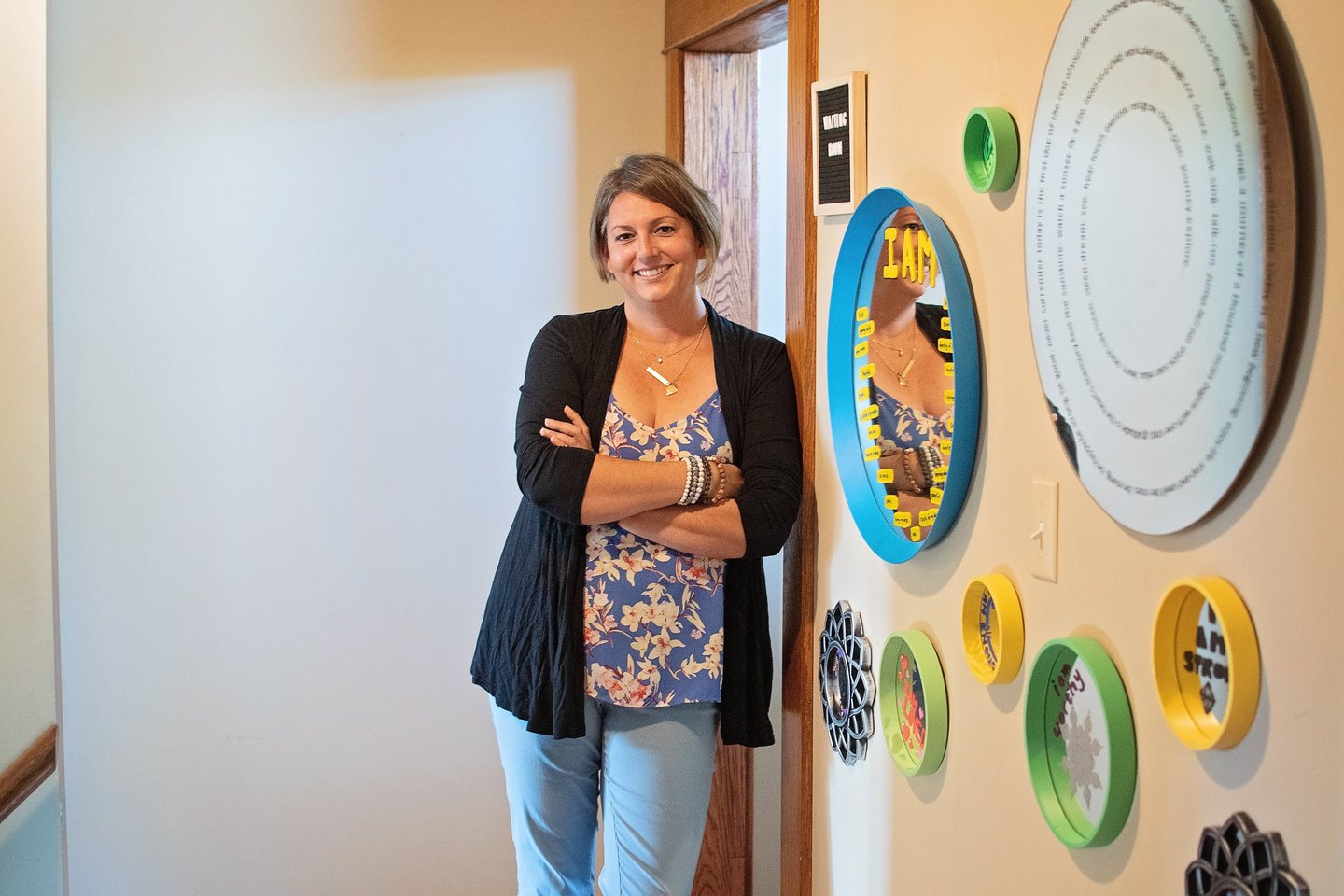
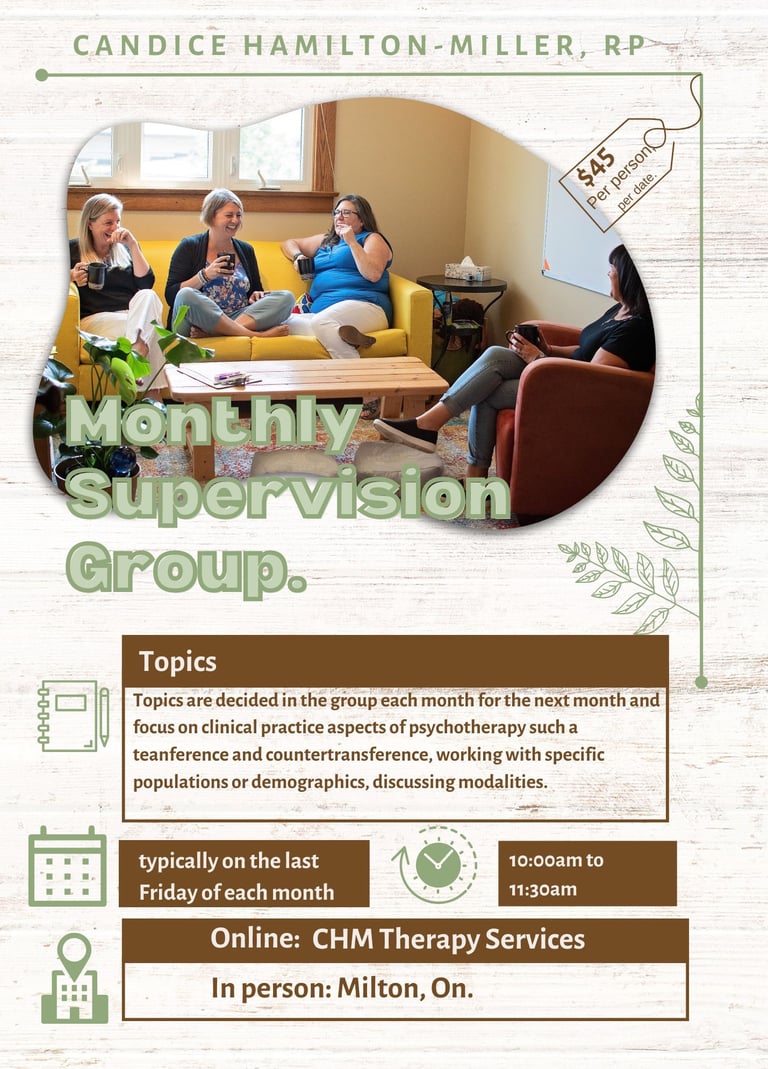
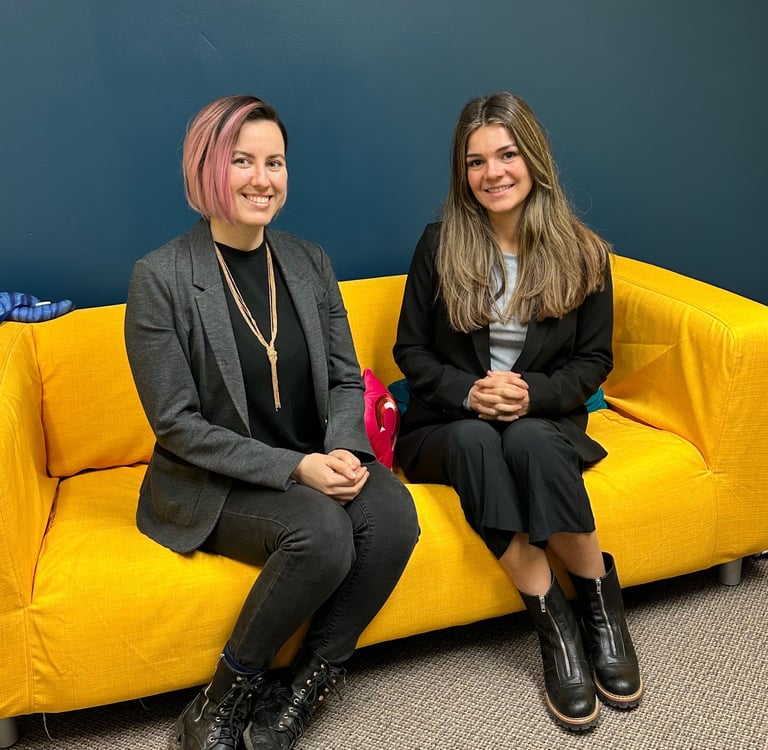
Candice Hamilton-Miller, RP, is a deeply experienced psychotherapist, supervisor, and educator with nearly two decades of clinical and supervisory practice. As the founder and clinical director of CHM Therapy Services, Candice is known for her integrative, down-to-earth, and insightful approach. Her supervision is rooted in real-world clinical wisdom, reflective practice, and a deeply held belief in the growth potential of every therapist. Candice has worked across hospital outpatient programs, private practice, schools, family health services, and community initiatives. She brings both academic insight and lived clinical experience into each supervision encounter.
Supervisory Style and Approach
Supervision with Candice is equal parts mentorship, dialogue, and practical coaching. Her tone is conversational and collaborative, and her sessions are infused with metaphor, laughter, and grounded clinical discussion. She is not a ‘clipboard and checklist’ supervisor—instead, she brings curiosity to every case and encourages supervisees to explore the 'why' behind their clinical instincts. You can expect Candice to ask questions like: 'What was happening in you when that moment happened?' or 'What do you think the client needed from you right then?' These questions are not meant to trip you up, but to deepen your clinical reflection and sense of self as a therapist.
She draws on the Integrative Developmental Model (IDM), reflective supervision, trauma-informed practice, and feminist frameworks to shape her supervision space. For newer therapists, Candice offers structure, session planning tools, and guidance on foundational clinical skills. For experienced clinicians, she offers deeper exploration of transference, ethical dilemmas, therapist identity, and practice growth.
Who Thrives Working with Candice
Therapists who work well with Candice are often those who are curious, open to learning, and willing to look at themselves in the therapeutic process. New graduates and interns often find Candice’s supervision comforting and grounding, especially when they're facing first-time experiences such as delivering a difficult intervention, writing clinical notes, or setting boundaries with clients. Candice normalizes the emotional load of this work while also helping clinicians develop clarity and structure. You may hear her say something like, 'You’re not doing it wrong. You’re just new at it. Let’s figure out how to get you unstuck.'
Clinicians who are transitioning into private practice or working in systems-heavy environments (such as schools or CAS collaborations) find Candice’s real-world insight and resource-sharing particularly valuable. She often shares language you can use in session or with parents, helps develop phrasing for sticky situations, and brings her years of experience into play with a calm, non-judgmental tone.
Who May Not Be a Fit
Therapists who are looking for rigid, manual-based supervision with strict fidelity to one model may not resonate with Candice’s integrative, fluid style. Her approach is based on flexibility, reflection, and fit—not ticking boxes. Those uncomfortable with exploring their own emotional responses, countertransference, or identity in the work may also find her style too introspective. Candice works from the belief that the therapist’s internal landscape is always part of the therapy room, and supervision is a place to safely examine that—not to avoid it.
Populations and Clinical Focus Areas
Candice has extensive experience supervising therapists who work with children, adolescents, and families. She is particularly effective with cases involving parenting dynamics, trauma, attachment disruptions, and behavioral challenges. She understands how developmental stages, educational systems, and family stressors intersect in the therapy room—and helps supervisees hold those tensions with clarity and compassion.
Therapists working with neurodivergent clients also benefit from Candice’s supervision. Whether supporting clients with ADHD, Autism, or executive functioning issues, Candice brings both behavioural and relational lenses to the conversation. She often encourages supervisees to explore questions like: 'Is this a skill gap or a regulation issue?' or 'How can we support the nervous system while still holding accountability?'
Candice also supervises therapists working with trauma, somatic processing, and emotion regulation. She is trained in narrative therapy, play therapy, and somatic-informed modalities, and regularly integrates those tools into supervision discussions. Therapists supporting LGBTQ+ clients, navigating identity issues, or doing work within high-conflict families (including CAS or custody-related matters) find her support especially helpful.
Credentials and Experience
Candice holds a Master of Science in Family Relations and Human Development, a Bachelor of Arts (Psychology), and extensive post-graduate certification in modalities including Narrative Therapy, Theraplay, Play Therapy, Applied Behaviour Analysis, and Cogmed Coaching. She is a Registered Psychotherapist with the College of Registered Psychotherapists of Ontario, and has taught in the Faculty of Applied Health and Community Studies at Sheridan College. Candice has received multiple community awards for excellence in mental health and has presented at regional and national mental health conferences. She continues to actively see clients while supervising interns and therapists at various stages of their careers.